Design
Prototypes
Framework 1: Terrain Reclamation through Material Transformation ↓
The site's building-produced refuse — demolition rubble, excavated soil, sand and gravel — is treated not as waste but as a raw material system. Sorted and classified, then repurposed as structural fill and cover-soil, it is layered back onto the site to build a new topographic form — a constructed hill and a series of island-like plateaus. The logic is circular: waste from human occupation becomes the medium for a new natural landscape.
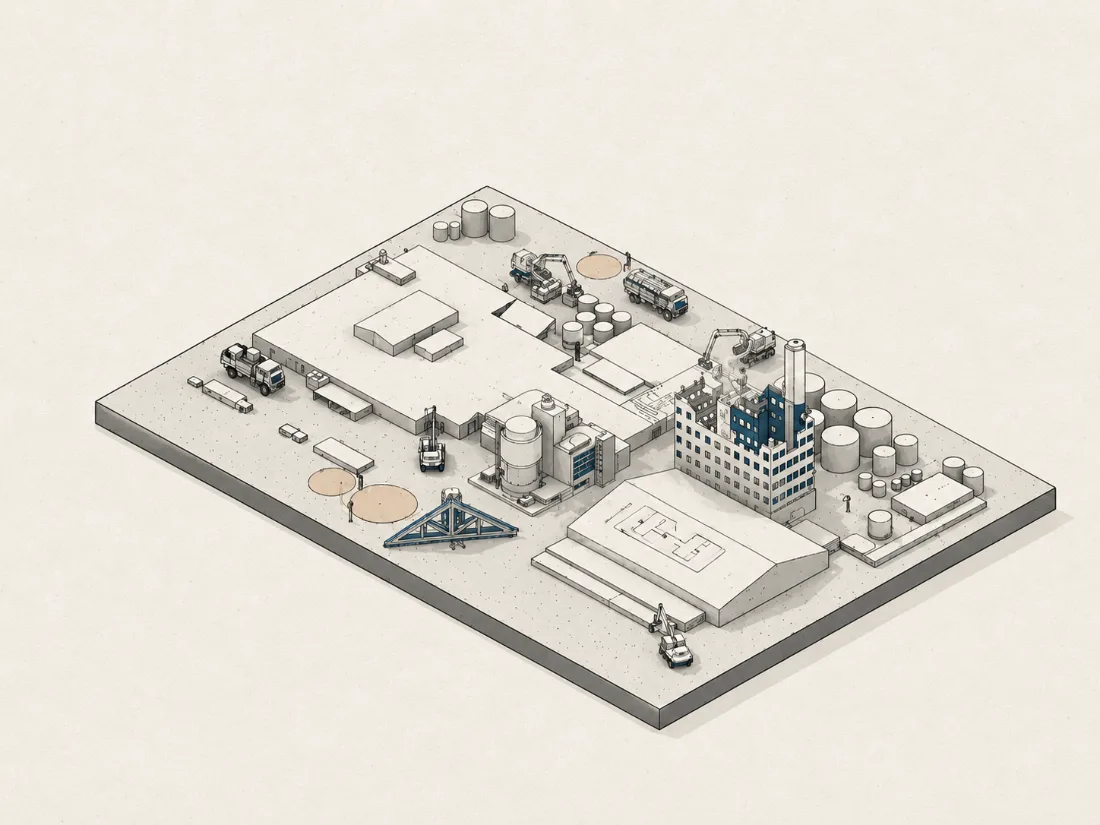
Demolition rubble, excavated soil, sand and gravel — kept on site as raw material.
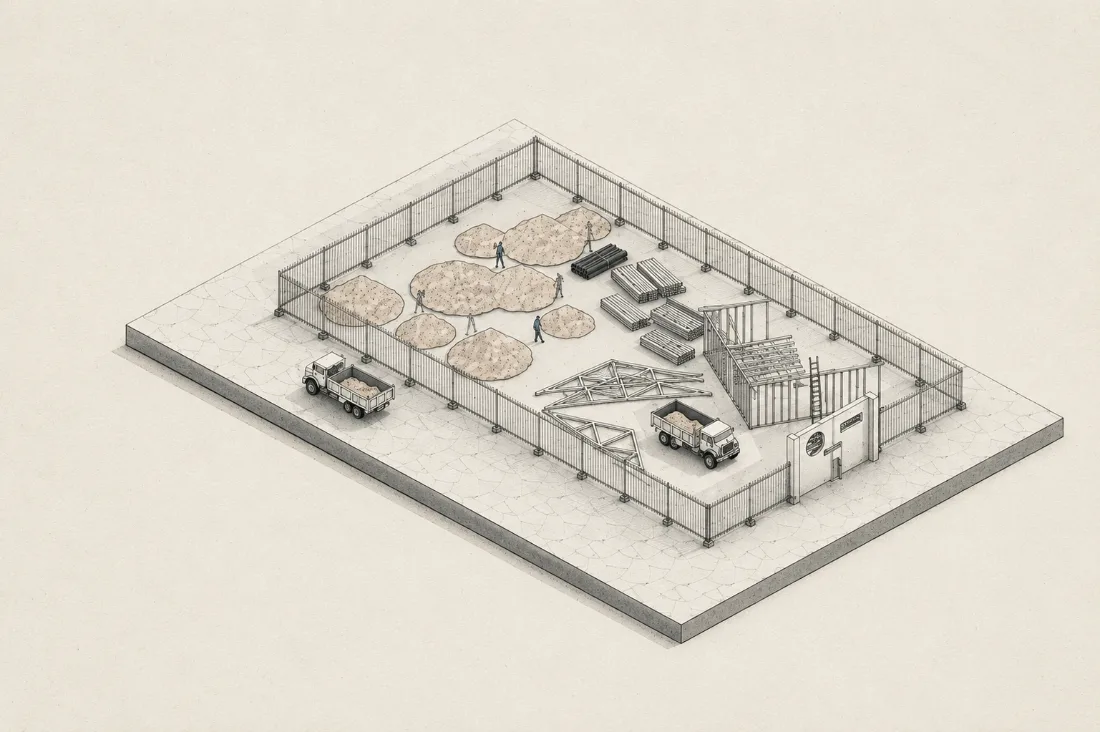
Sorted and classified into reusable material streams.
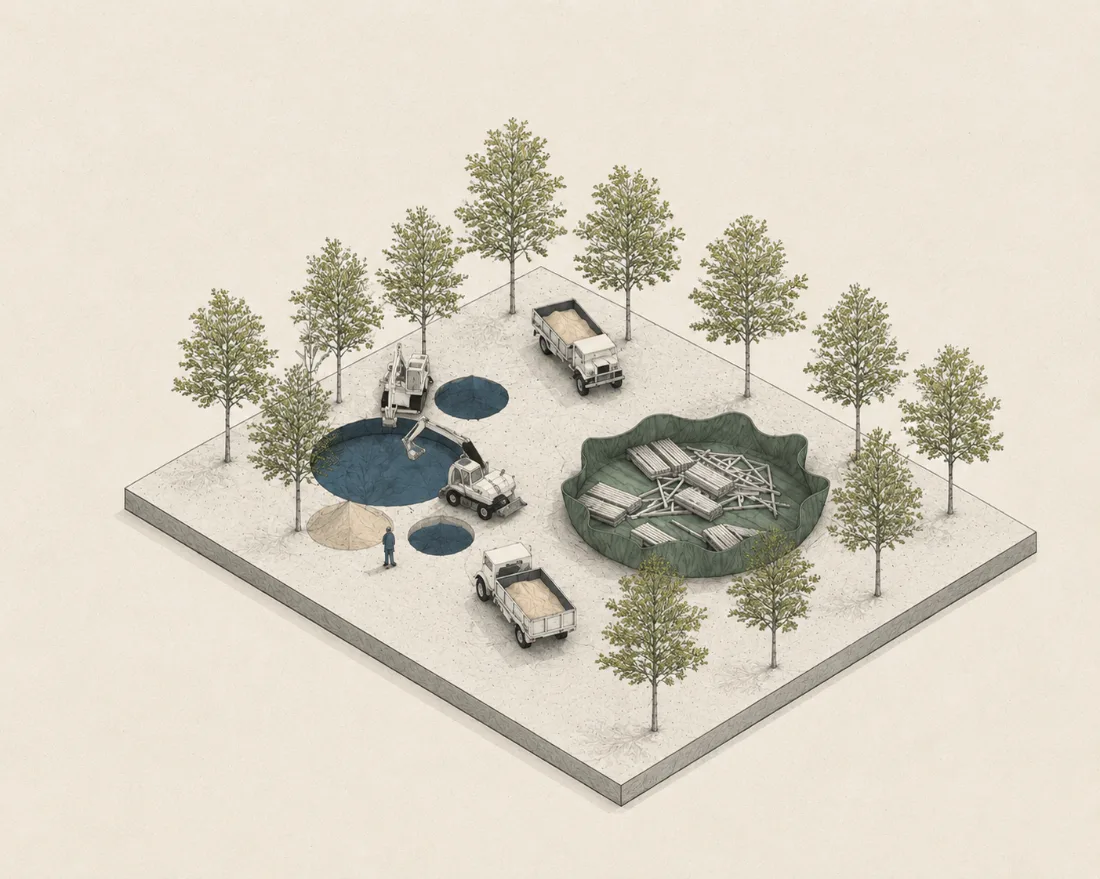
Coarse rubble repurposed as structural fill — builds the hill.
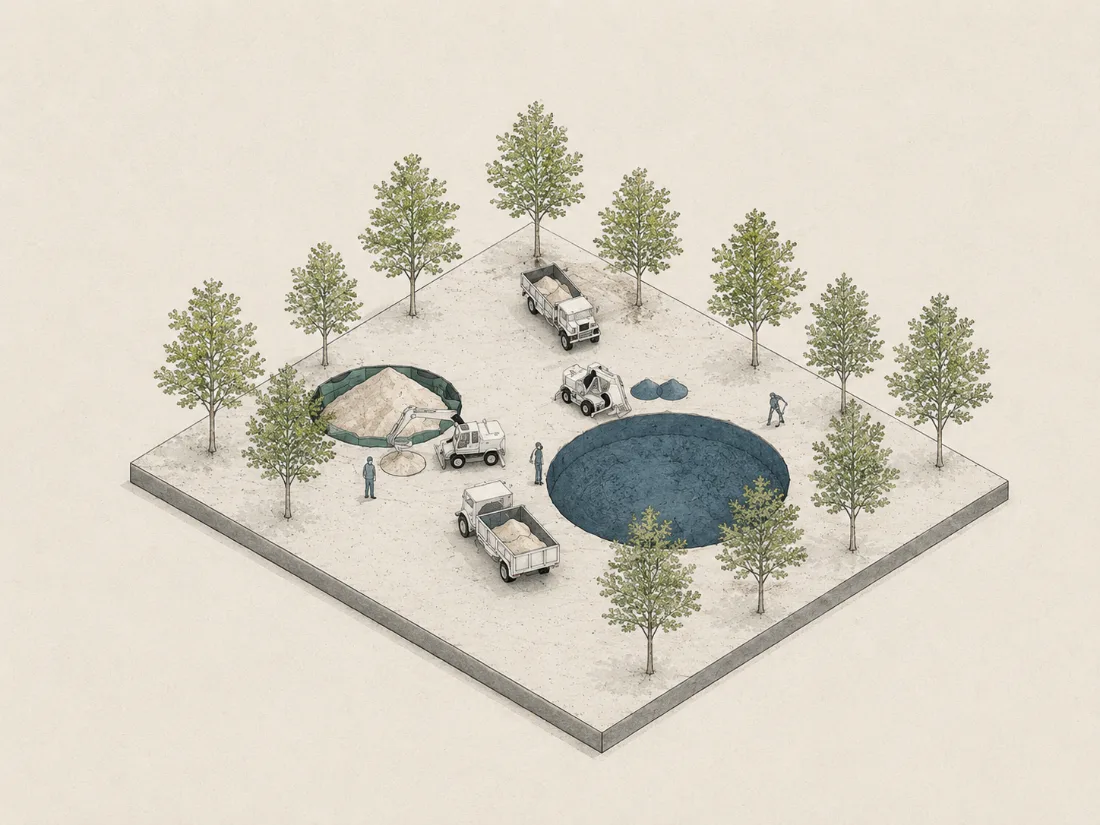
Fine soil repurposed as cover-soil substrate — surfaces the islands.
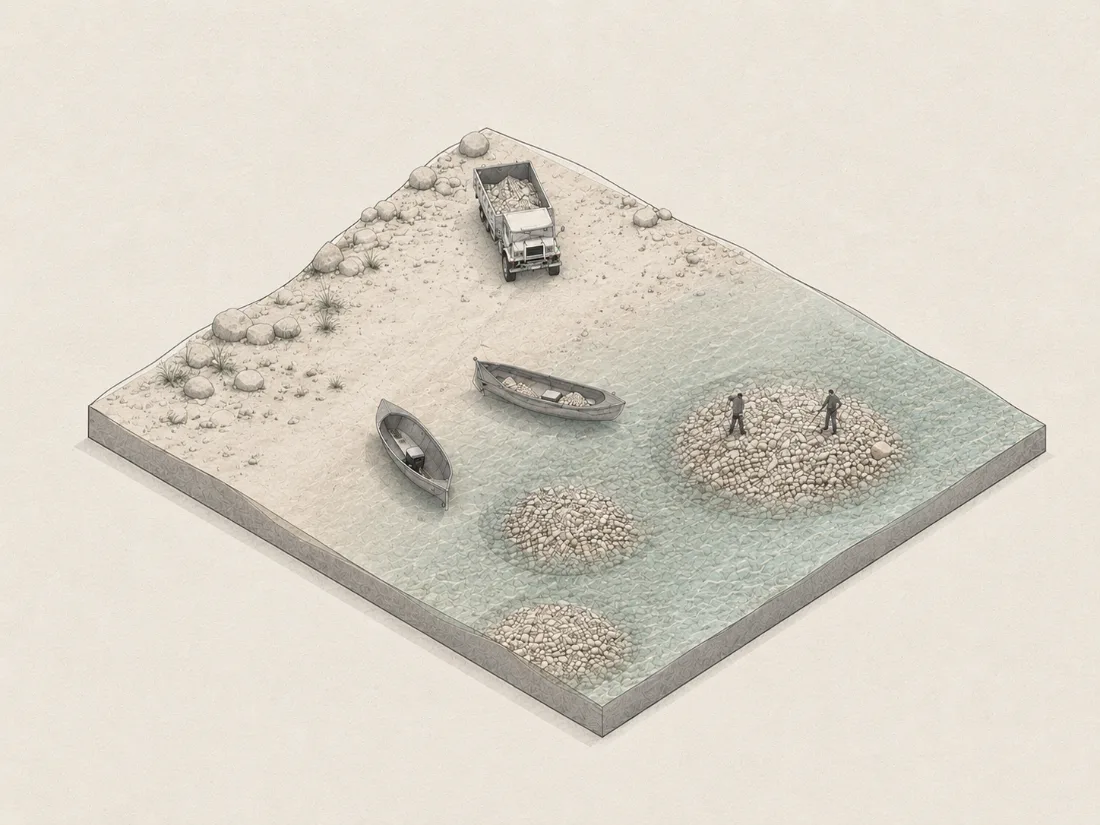
Fill layered into a new topographic form.
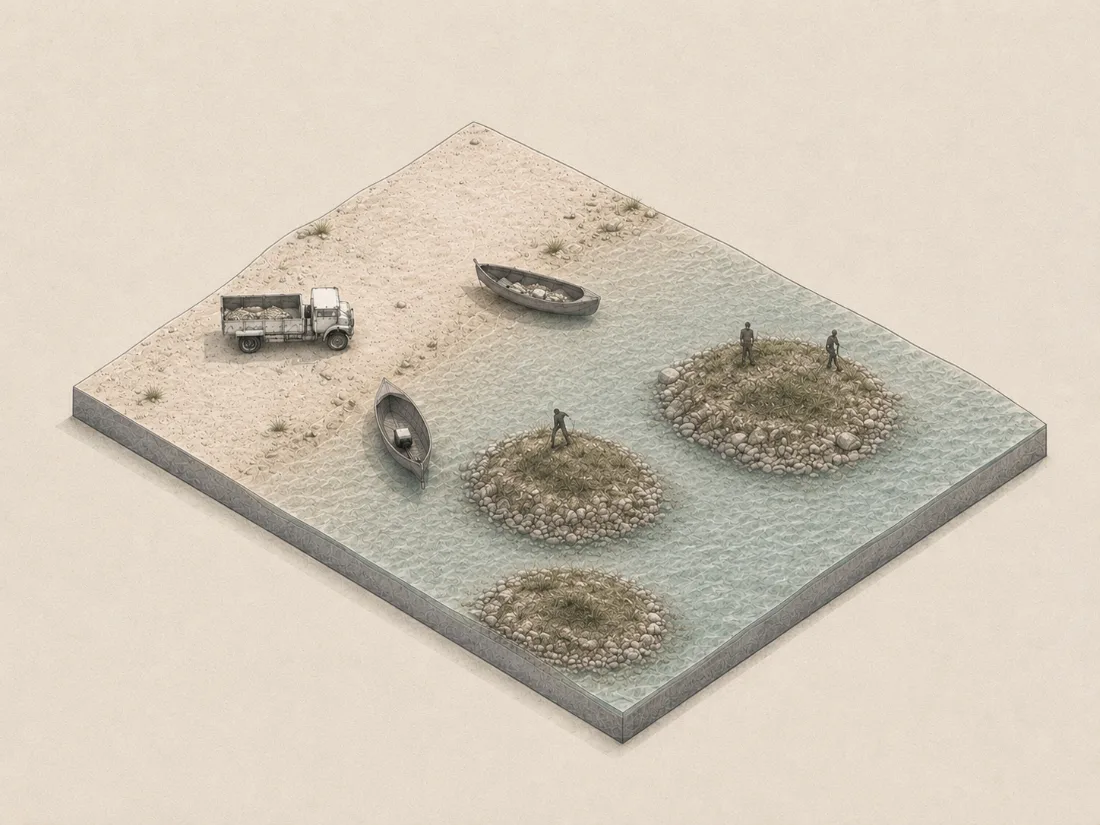
Elevated plateaus restructure the flat, degraded terrain.
Framework 2: Contaminated Ground as Spatial Opportunity ↓
The design begins by acknowledging contamination rather than erasing it. The site — subsurface soil pollution and scattered excavation pits — is surveyed and classified. Contaminated soil is extracted and relocated to a landfill disposal zone, while the residual pits, once liabilities, become the spatial skeleton of a new public program. The voids are deepened, widened and shaped to hold an acting area with bleachers, a reflective pond, rotating parking, and food and beverage. A zone of environmental risk becomes a vibrant destination embedded in the remediated landscape.
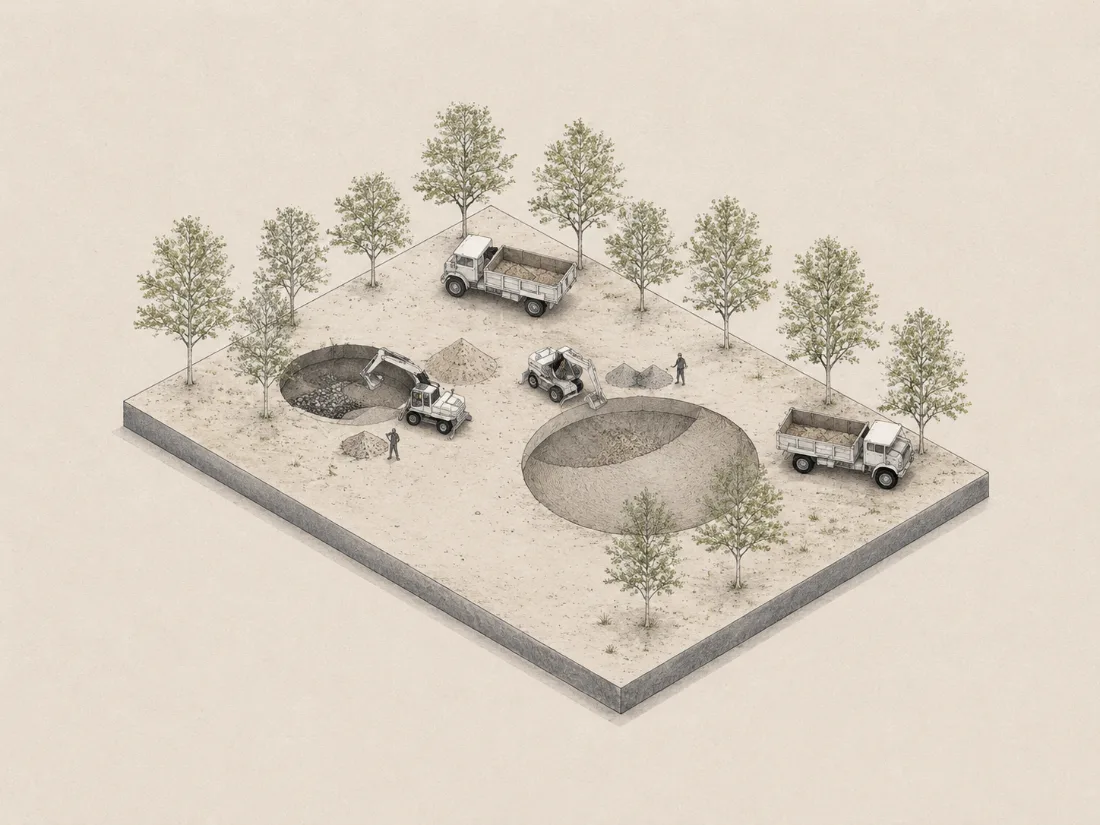
Subsurface pollution and scattered pits — surveyed and classified.
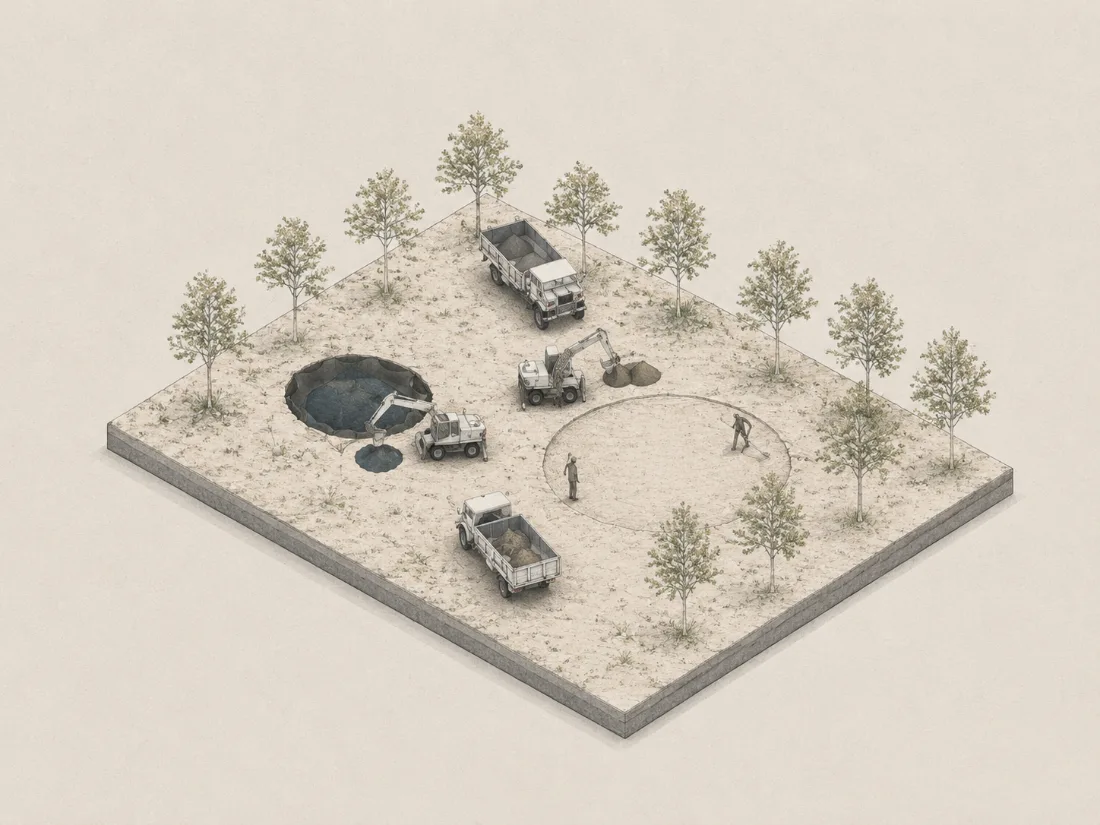
Contaminated soil removed to a landfill zone; the empty pits stay.
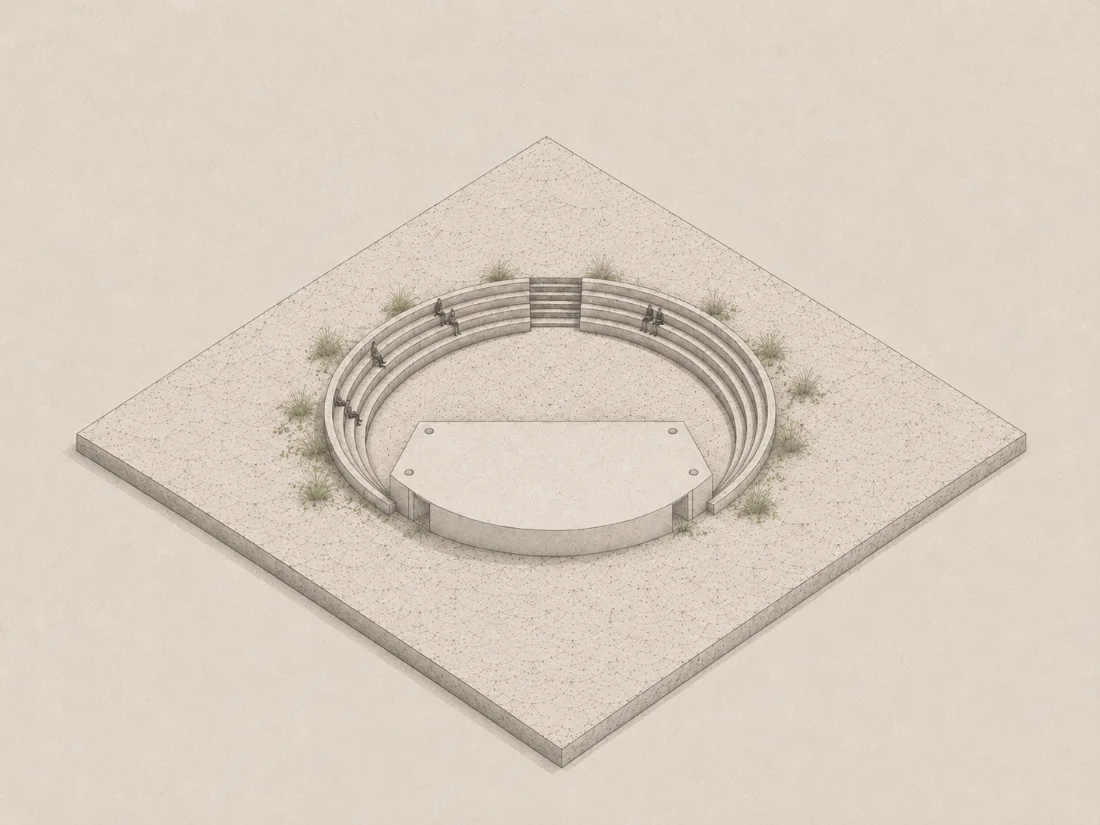
A void shaped into a sunken amphitheatre.
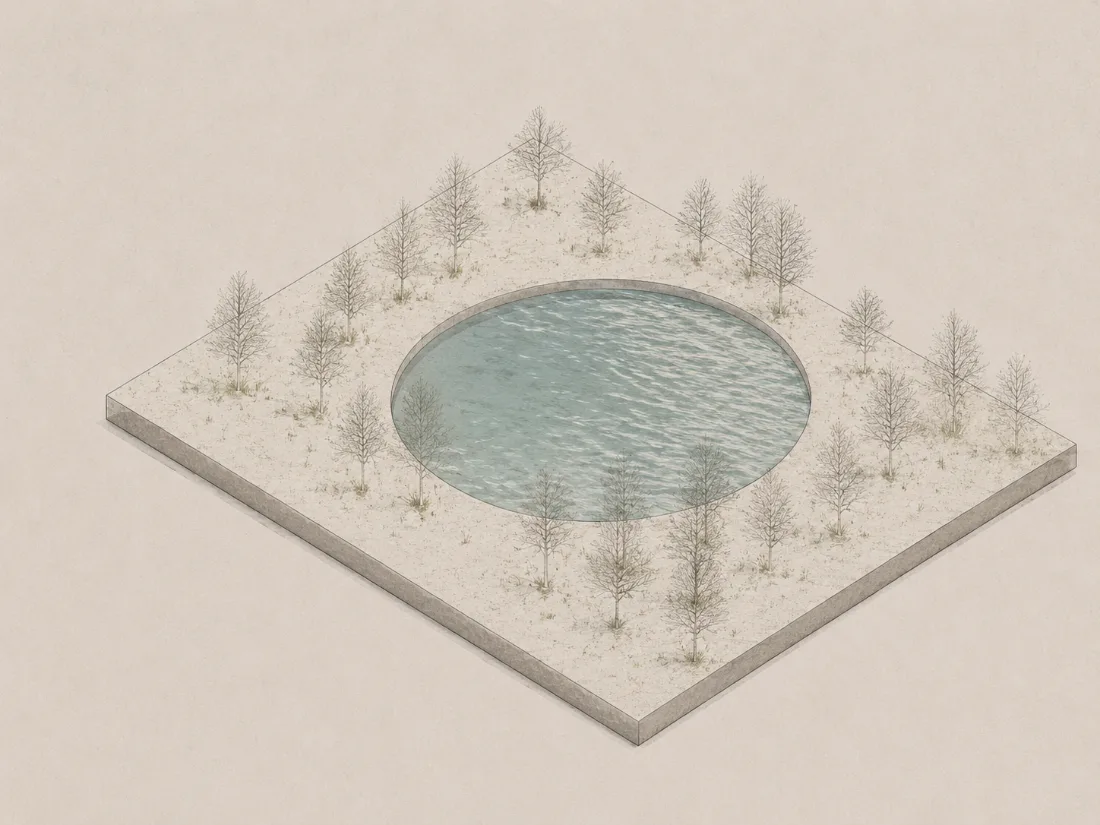
A pit deepened and sealed to hold water.
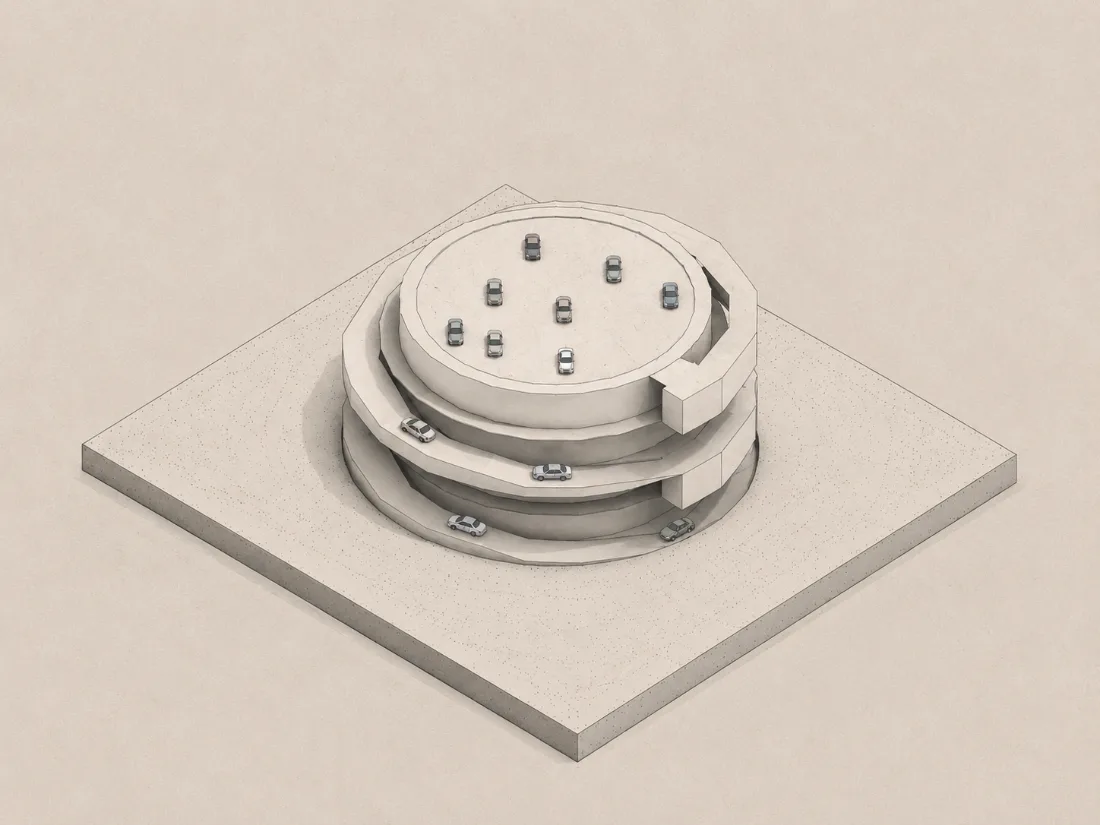
A spiral ramp winds cars down into the ground.
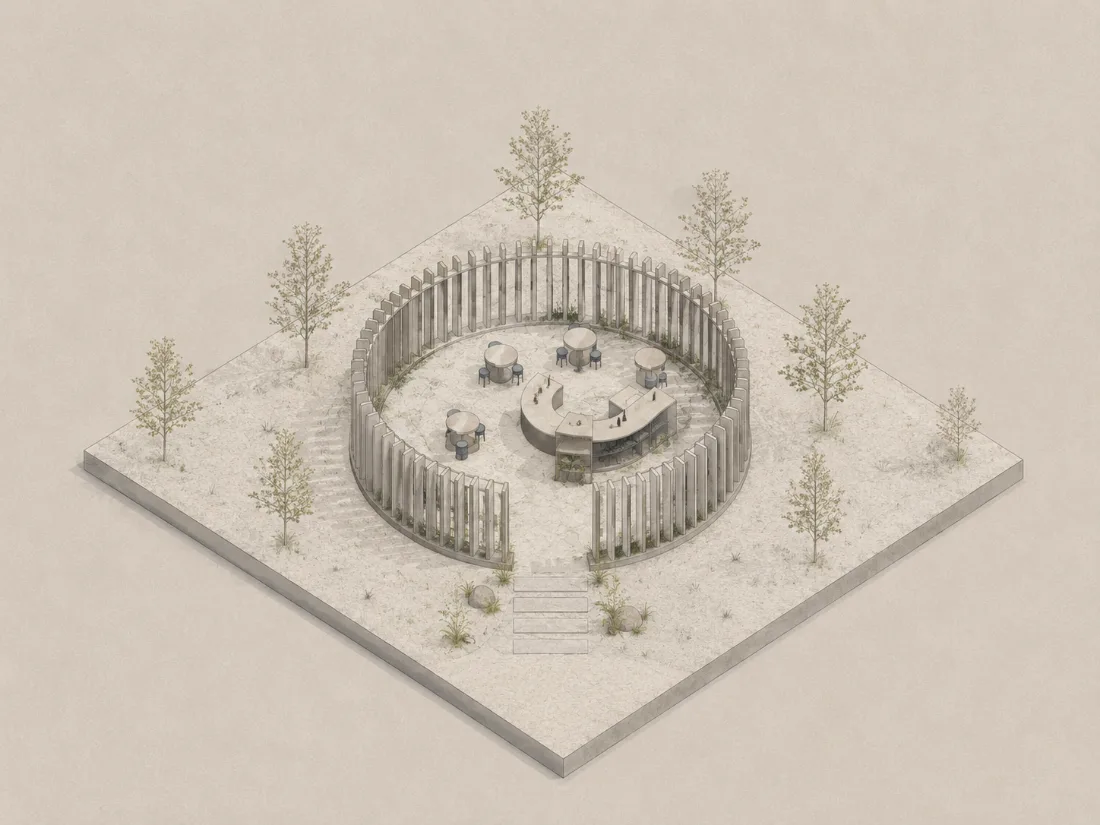
Food and beverage set within an enclosed court.
Framework 3: Phytoremediation and Resource Recovery through Water Flow ↓
Caohai, the northern basin of Dianchi Lake, has long carried high pollutant loads from inflowing surface water. This framework uses the site's own hydrology — subsurface flow and prevailing winds — to route polluted water through a purification sequence. Inflow enters constructed wetland cells colonised by blue-green algae; as water migrates through, the algae absorb excess nitrogen, phosphorus and heavy metals, converting them into harvestable biomass. Treated water exits fit for ecological reuse, while byproducts — marsh gas and organic manure — are captured as secondary resources, closing the nutrient loop.
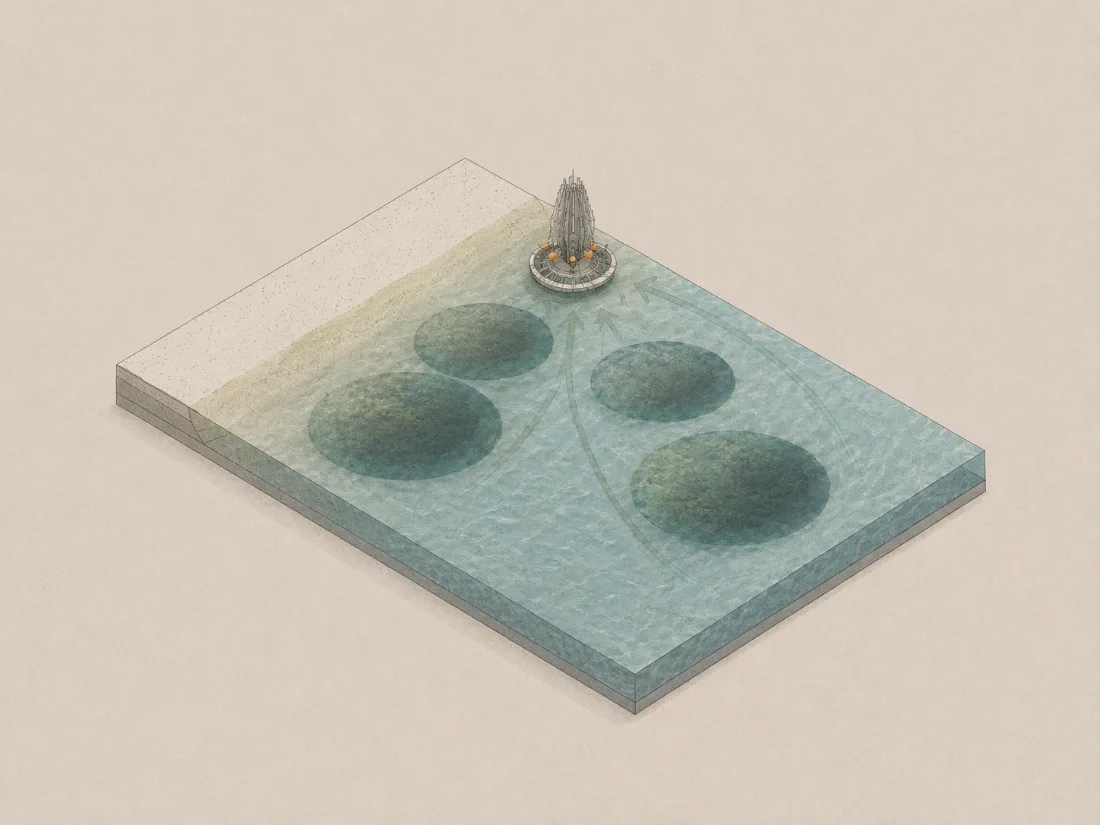
Inflow channelled into wetland cells seeded with blue-green algae.
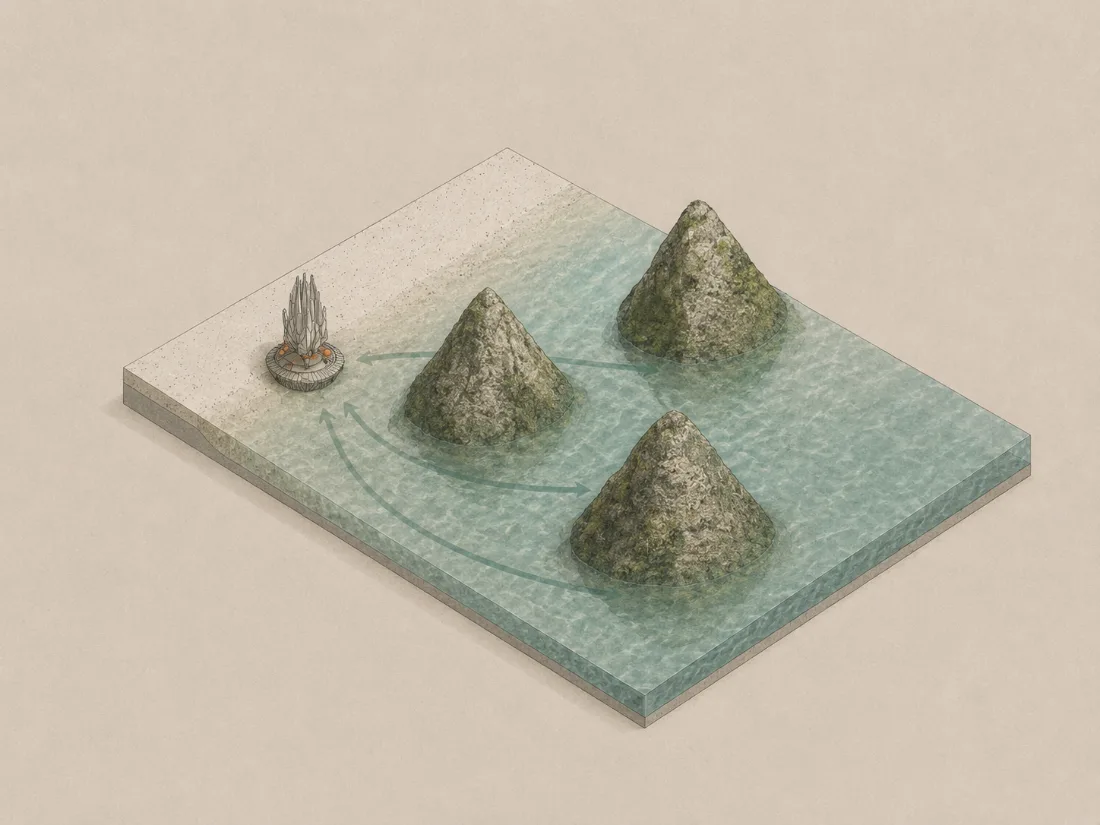
Algae absorb nitrogen, phosphorus and heavy metals via subsurface flow.
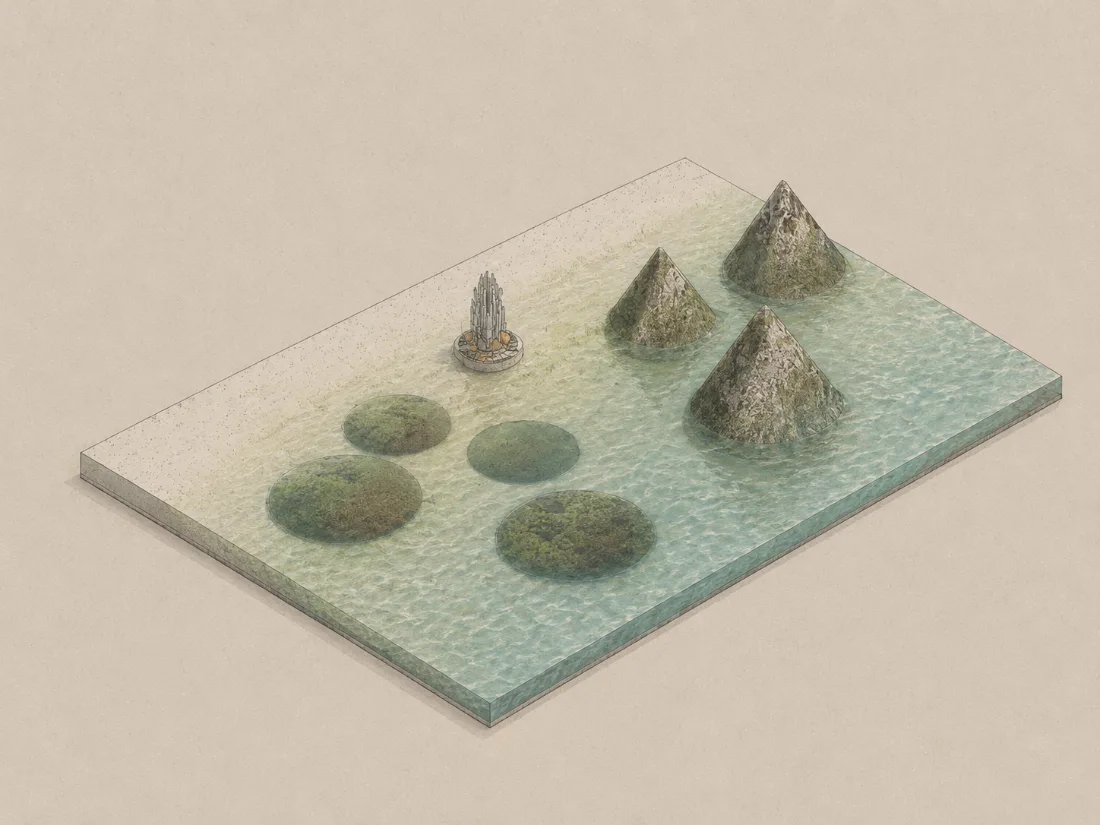
Cells and biomass build a living phytoremediation field.
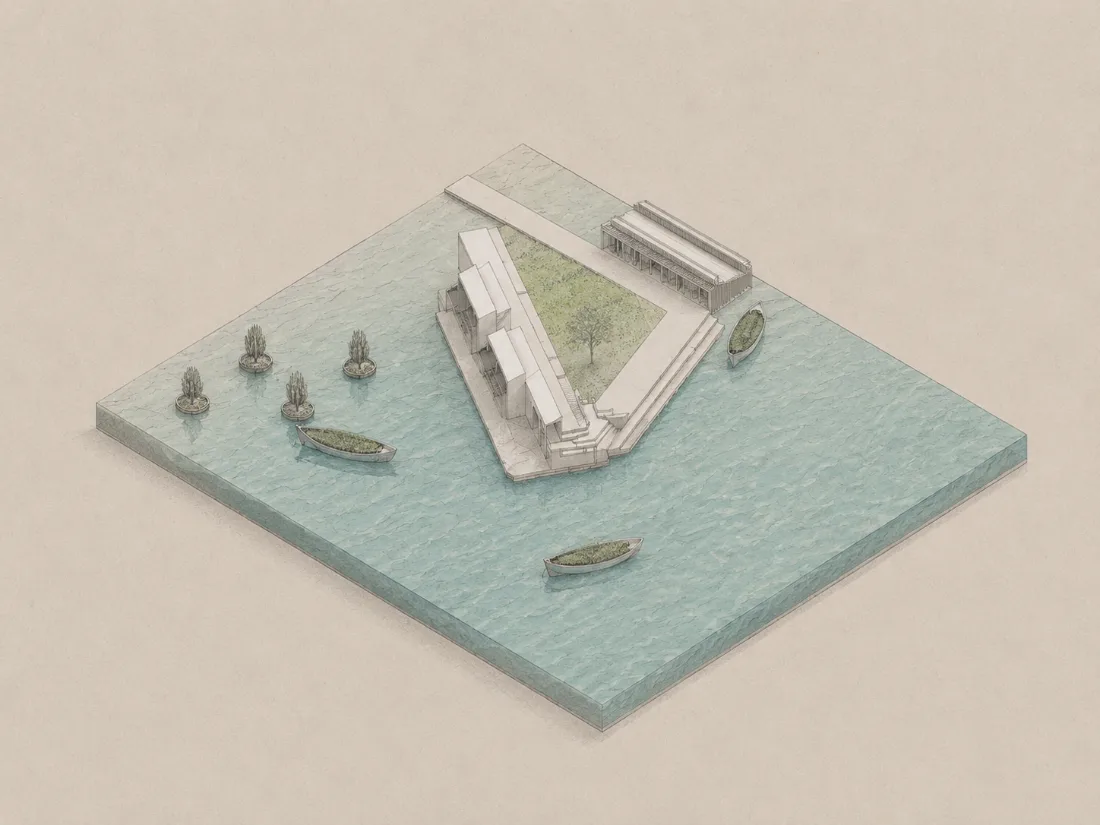
Treated water exits the system, fit for ecological reuse.
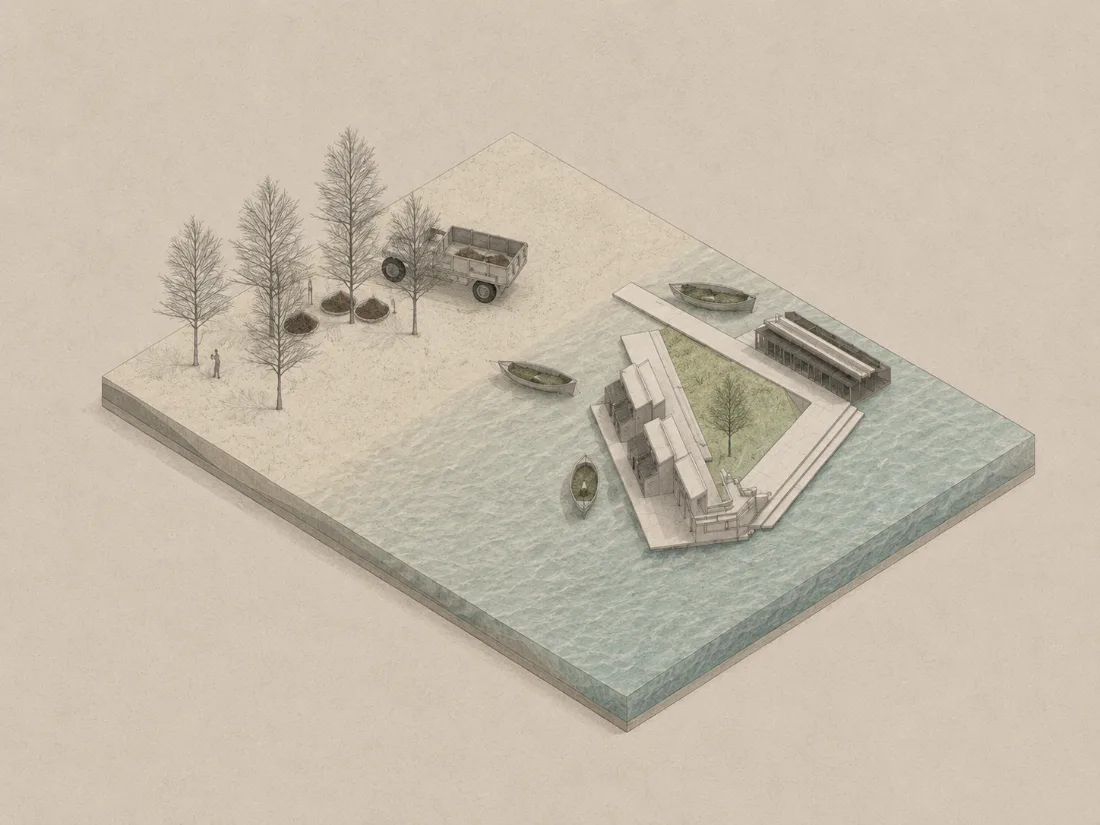
Biological byproducts captured as secondary resources.